
AATD
AATD begins in the liver, progresses silently in the lungs, and hides in plain sight. We need to act now.



What is AATD?
Alpha‑1 Antitrypsin Deficiency (AATD or Alpha‑1) is a progressive, genetic condition that can silently and irreversibly damage the liver and lungs. AATD, it is also known as genetic COPD/emphysema and genetic cirrhosis.
AATD is caused by changes, called variants, in the SERPINA1 gene. This gene provides instructions for making alpha-1 antitrypsin (AAT), a protective protein produced in the liver. It circulates in the bloodstream and helps protect the lungs from damage caused by enzymes released by immune cells. Hundreds of SERPINA1 variants have been identified, some of which are associated with AAT deficiency or dysfunction.
The impact of AATD in the United States is formidable. In fact, a genetic, epidemiologic meta-analysis estimated that approximately 20 million people in the U.S. carry one or more deficient AAT alleles.1,2 In addition, approximately 100,000 people have severe AATD (ZZ alleles).3 However, nine out of ten of those with AATD have not been diagnosed.4
More than 150 SERPINA1 variant alleles have been identified. AlphaDetect tests for Z, S, I, and F because they account for ~96% of all deficient alleles.
- Z: Severely reduced circulating AAT and intracellular accumulation in liver; associated with severe AATD
- S: Moderately reduced circulating AAT
- I: Rare allele associated with mild reduction in circulating AAT
- F: Rare allele with normal AAT protein level, but impaired AAT function
Healthcare providers can play a critical role in detecting individuals with AATD in their practices. Identification of AATD changes how liver and lung disease is managed: treatment options and specific care plans are available.
Who to test?
Many clinical practice guidelines, standards, and expert consensus statements recommend testing for AATD in patients with liver and/or lung disease5,6,7,8






To ensure that no affected individual goes undetected, test your patients with:
- COPD, regardless of age or ethnicity
- Emphysema
- Asthma, if there is persistent obstruction despite optimized treatment
- Bronchiectasis, if otherwise unexplained
- Liver disease
- Panniculitis and anti-proteinase-3
- Parents, siblings, and children of individuals identified with deficiency of alpha-1 antitrypsin should be tested
Early detection can help guide appropriate management and prevent irreversible damage due to progressive liver and/or lung disease.
Recommendations above are from the American Thoracic Society (ATS), European Respiratory Society (ERS), the American College of Chest Physicians (CHEST), Global Initiative for Chronic Obstructive Lung Disease (GOLD), the American Gastroenterological Association (AGA), the American Association for the Study of Liver Diseases (AASLD), and the European Association for the Study of the Liver (EASL). They are representative, but not fully inclusive of all reference sources.
The 101 on AATD

What Causes AATD?
AATD is caused by genetic variants, or deficient alleles, in the SERPINA1 gene. This gene provides instructions for making AAT—a protective protein produced in the liver that circulates in the bloodstream to protect lung tissues.
What causes AATD?
AATD is caused by genetic variants, or deficient alleles, in the SERPINA1 gene. This gene provides instructions for making a protein called alpha‑1 antitrypsin (AAT)—a protective protein produced in the liver that circulates in the bloodstream to protect lung tissues.
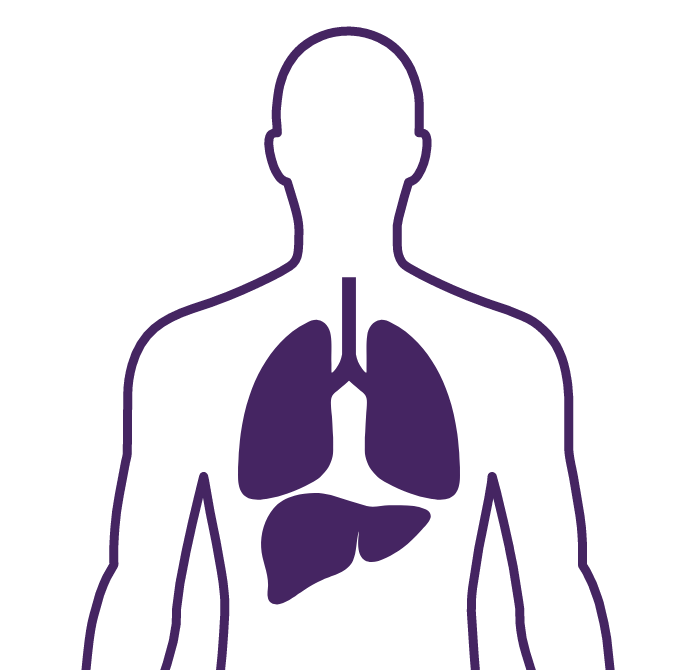
When AAT functions normally, it helps protect the lungs from inflammation and tissue damage. But in people with AATD:
- Abnormally misfolded AAT protein can become trapped in the liver, where it may accumulate and cause progressive and irreversible liver damage
- In some patients, insufficient AAT protein reaches the lungs, leaving them vulnerable to irreversible damage over time
Because AATD symptoms often resemble those of more common liver diseases, eg, cirrhosis, and lung diseases, eg, COPD and emphysema, the condition can remain hidden in plain sight until genetic testing is performed.

What is the Risk to the Liver?
Abnormal AAT protein accumulates within hepatic cells, leading to cellular stress, inflammation, and progressive, irreversible damage.
Over time, this toxic buildup can result in scarring, fibrosis, cirrhosis, and, in severe cases, liver failure or hepatocellular carcinoma.
What is the Risk to the Lungs?
AAT protein level identifies the amount of AAT protein circulating in the blood. An insufficient AAT protein level leaves lung tissues vulnerable to the enzyme neutrophil elastase, which attacks and destroys normal lung tissue.
Over time, this unchecked activity can lead to alveolar destruction, chronic inflammation, and the development of conditions like COPD, emphysema, and bronchiectasis, even in individuals who have never smoked.9

What Role Does Genetics Play?
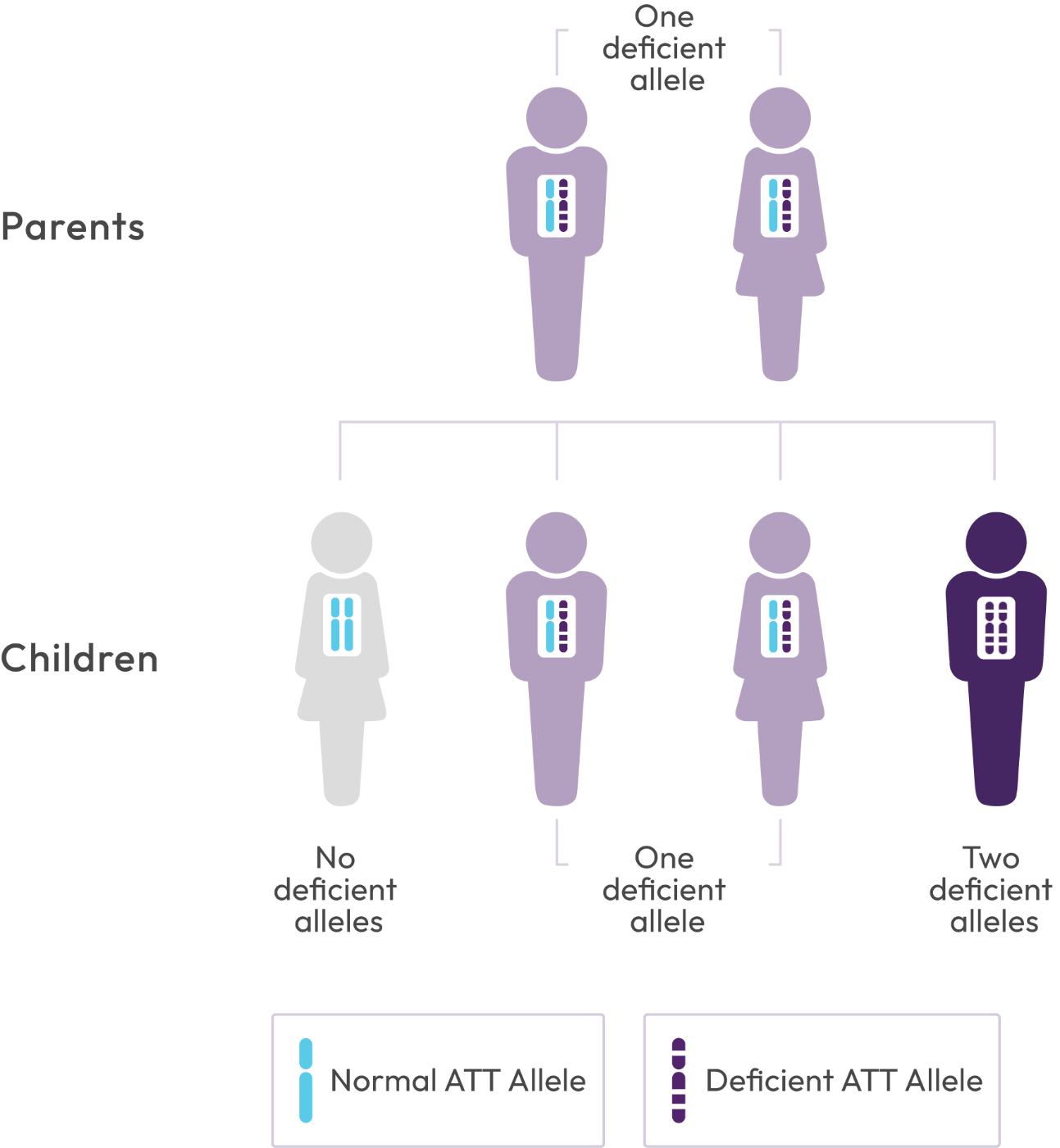
AATD is a genetic condition. Affected individuals inherit one allele from each parent. Together, these two alleles determine an individual’s genotype. Importantly, even among those with the same genotype, clinical presentations and disease burdens can vary significantly.
Identifying a deficient allele indicates an increased risk among biological relatives and should prompt discussion of family testing. The family tree at rightbelow shows how the risk for AATD is inherited.
In accordance with clinical guidelines/standards, testing family members of an individual with one or more deficient alleles, ie, parents, children, and siblings, can uncover others who may be at risk. Learning that they have one or two deficient alleles—even if they are asymptomatic—gives individuals the opportunity to make more informed lifestyle decisions, such as avoiding smoking and limiting environmental irritants that can meaningfully impact disease outcomes.
How AATD Can Be Passed Down to Future Generations
More than 150 SERPINA1 variant alleles have been identified. AlphaDetect tests for Z, S, I, and F because these four alleles account for ~96% of all deficient alleles, and reports on these four plus M, the normal allele.
Common Normal Allele
| M allele | Normal, functional AAT production |
Common Deficient Alleles
| Z allele | Severely reduced circulating AAT and intracellular accumulation in liver; associated with severe AATD |
| S allele | Moderately reduced circulating AAT |
| I allele | Rare allele associated with mild reduction in circulating AAT |
| F allele | Rare allele with normal AAT protein level, but impaired AAT function |

How Many Are Affected?
Approximately 20 million people in the U.S. carry at least one deficient AAT allele.1,2 Typically, those with one deficient allele—also known as carriers—don’t develop severe symptoms but can pass the deficient allele to their children.
Millions Are Affected but May Not Know It.
Approximately 20 million have one or more deficient alpha‑1 alleles
 One or more deficient alpha‑1 alleles
 Two deficient alpha‑1 alleles
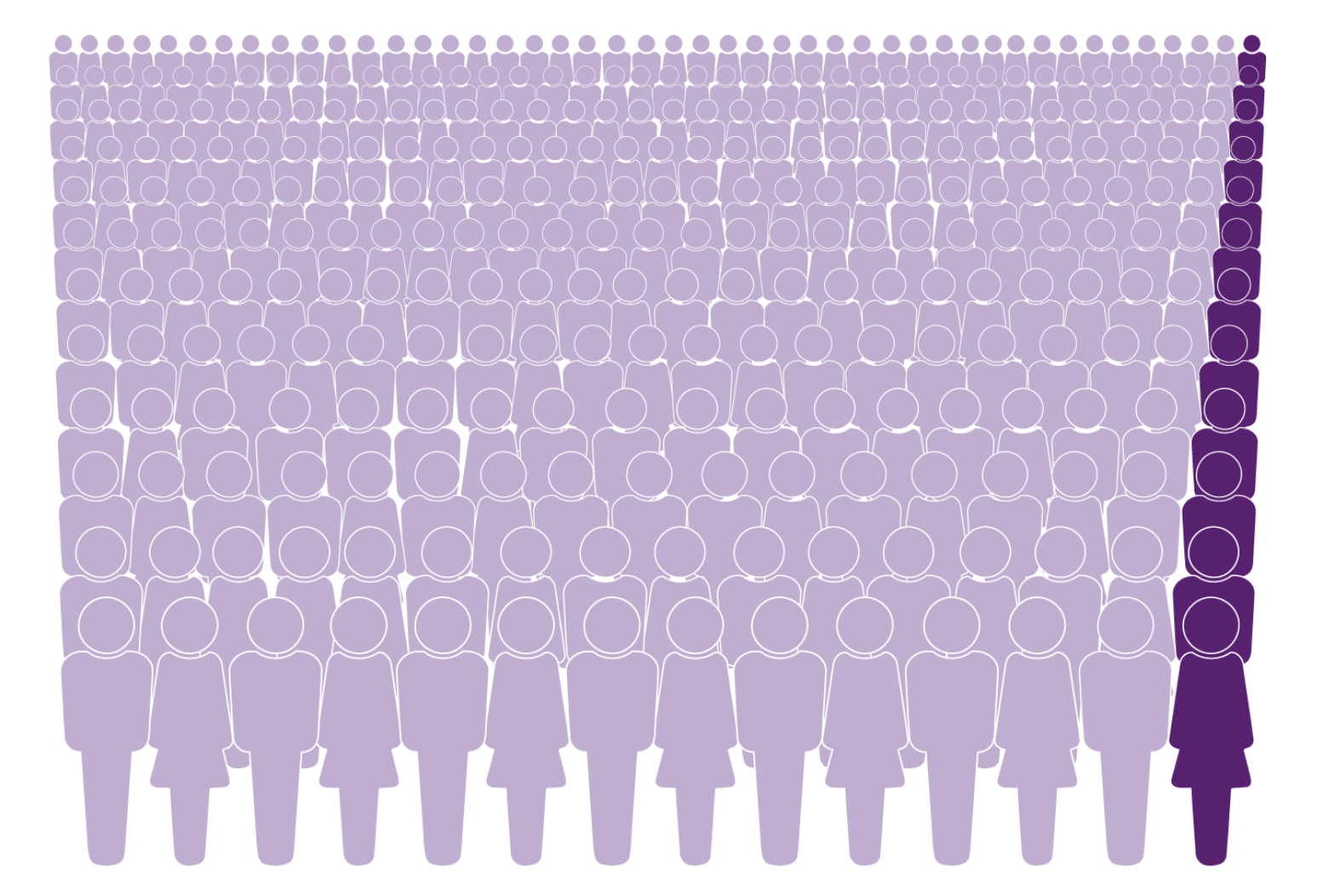
100,000 have two deficient alpha‑1 alleles

How many have AATD?
Approximately 100,000 people in the U.S. have severe AATD (ZZ alleles).3 Yet 9 out of 10 remain undiagnosed.4 That’s why it’s important to know if there is an underlying, genetic cause in patients with liver and/or lung disease.

Hidden in Plain Sight: 9 out of 10 People With AATD Have Not Been Diagnosed
With so many individuals still undiagnosed, could there be a few in your practice? The only way to know for sure is by routinely testing patients with liver and/or lung disease for AATD, in alignment with clinical practice guidelines/standards.
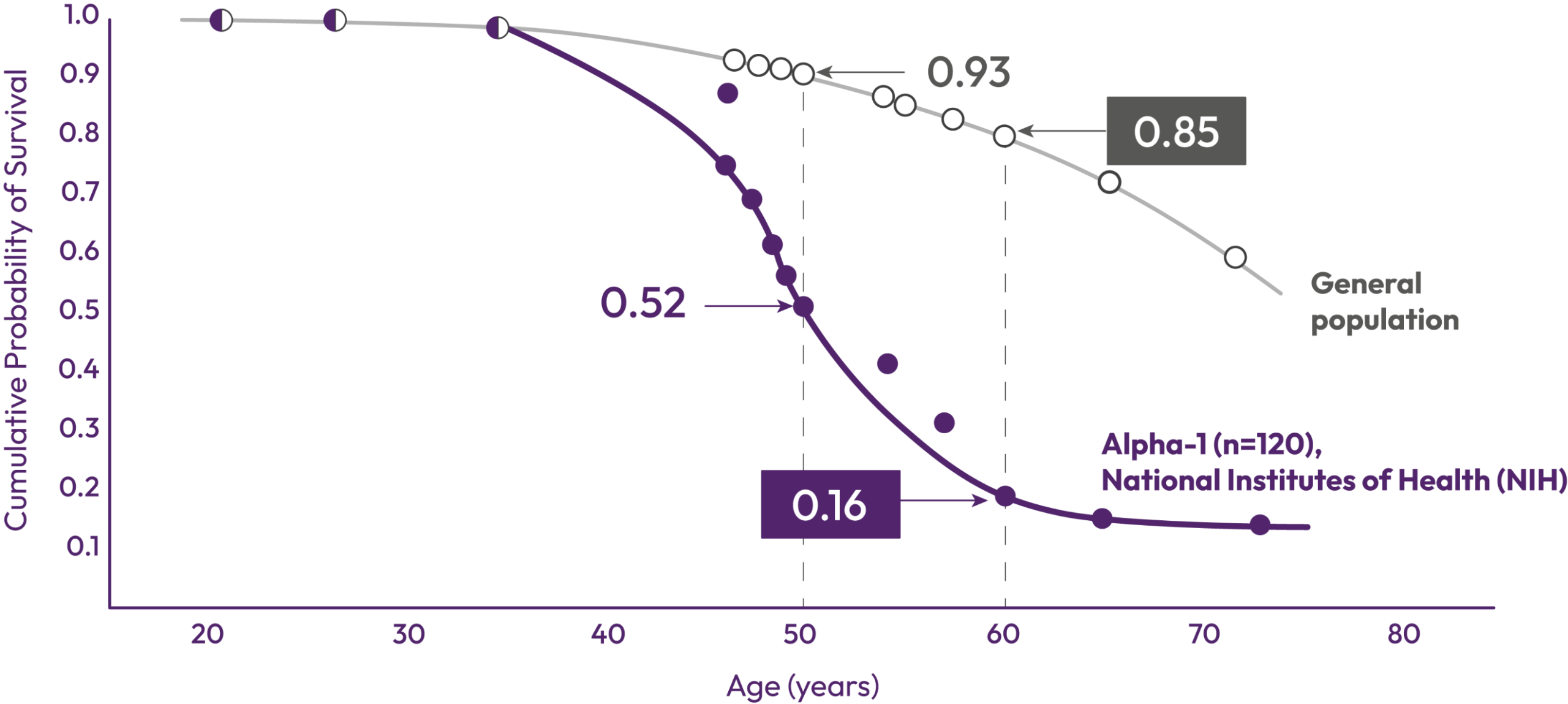
Survival data
Survival data from a landmark study published in the American Review of Respiratory Disease.10 Timely detection can accelerate answers to inform decisions.
Survival Analysis of AATD Cohort vs General Population (US)
I wasn't diagnosed with AATD until I lost over 70% of my lung function. No one should wait that long for answers.

By prioritizing earlier detection, healthcare providers can identify people who are unaware that they are living with AATD—and at-risk family members—thereby accelerating answers and informing decisions. AlphaDetect can assist you in integrating routine, guideline-aligned testing into your clinical workflow.

References: 1. de Serres FJ. Worldwide racial and ethnic distribution of alpha1-antitrypsin deficiency: summary of an analysis of published genetic epidemiologic surveys. Chest. 2002 Nov;122(5):1818-29. doi:10.1378/chest.122.5.1818. PMID: 12426287.2. Nelson DR, Teckman J, Di Bisceglie AM, Brenner DA. Diagnosis and management of patients with α1-antitrypsin (A1AT) deficiency. Clin Gastroenterol Hepatol. 2012 Jun;10(6):575-80. doi:10.1016/j.cgh.2011.12.028. Epub 2011 Dec 23. PMID: 22200689; PMCID: PMC3360829.3. Stoller JK. Detecting Alpha-1 Antitrypsin Deficiency: Current State, Impediments, Opportunities, and Future Directions. Ann Am Thorac Soc. 2025;22(1):23–31. doi: 10.1513/AnnalsATS.202406-600FR.4. Brantly M, Campos M, Davis AM, et al. Detection of alpha-1 antitrypsin deficiency: The past, present and future. Orphanet J Rare Dis. 2020;15(1):96. doi:10.1186/s13023-020-01352-5.5. American Thoracic Society; European Respiratory Society. American Thoracic Society/European Respiratory Society statement: standards for the diagnosis and management of individuals with alpha-1 antitrypsin deficiency. Am J Respir Crit Care Med. 2003 Oct 1;168(7):818-900. doi:10.1164/rccm.168.7.818. PMID: 14522813.6. Sandhaus RA, Turino G, Brantly ML, et al. The Diagnosis and Management of Alpha-1 Antitrypsin Deficiency in the Adult. Chronic Obstr Pulm Dis. 2016 Jun 6;3(3):668-682. doi:10.15326/jcopdf.3.3.2015.0182.7. Global Initiative for Chronic Obstructive Lung Disease (GOLD). Global Strategy for Prevention, Diagnosis and Management of COPD: 2026 Report. Fontana, WI: Global Initiative for Chronic Obstructive Lung Disease; 2026. https://goldcopd.org/wp-content/uploads/2026/01/GOLD-REPORT-2026-v1.3-8Dec2025_WMV2.pdf Accessed September 4, 2026.8. Loomba R, Clark VC, Mandorfer M, Miravitlles M, Brantly M, Karpen SJ, Krag A, Kwo PY, Rockey DC, Russo MW, Sanchez AJ, Santarella S, Sharpton SR, Strange C, Teckman JH, Turner AM, Vargas HE, Strnad P. Multi-Society Expert Panel Consensus Guidance Regarding Clinical Assessment and Clinical Trial Endpoints in Adults With Alpha‑1 Antitrypsin Deficiency-Associated Liver Disease. Gastroenterology. 2026 Apr;170(4):829-842. doi:10.1053/j.gastro.2025.12.012. Epub 2025 Dec 11. PMID: 41390004.9. Molloy K, Hersh CP, Morris VB, et al. Clarification of the risk of chronic obstructive pulmonary disease in α1-antitrypsin deficiency PiMZ heterozygotes. Am J Respir Crit Care Med. 2014 Feb 15;189(4):419-27. doi:10.1164/rccm.201311-1984OC. PMID: 24428606; PMCID: PMC5955067.10. Brantly ML, Paul LD, Miller BH, et al. Clinical features and history of the destructive lung disease associated with alpha-1-antitrypsin deficiency of adults with pulmonary symptoms. Am Rev Respir Dis. 1988;138(2):327-336.