
Resources
I’m thrilled to see the growing resources and focused energy to help support detection efforts.


Resources to support your detection efforts, including clinical papers and patient education materials
-
1. How is AlphaDetect affiliated with the Alpha‑1 Foundation?
AlphaDetect is a non-profit subsidiary formed and wholly owned by the Alpha‑1 Foundation (A1F) to uncover people genetically at risk for Alpha‑1 Antitrypsin Deficiency (AATD or Alpha‑1). AlphaDetect is a beneficiary of A1F funding and is recognized by the Internal Revenue Service as a tax-exempt organization under 26 U.S.C. § 501(c)(3). For more information about A1F and related nonprofit details, see A1F Financial Statements.
In addition, AlphaDetect provides a seamless point of entry into A1F and its comprehensive resources, information, and support for providers and people identified at risk for AATD.
-
2. Why does the patient need to sign the kit order form?
Patient privacy and transparency are important to AlphaDetect. Given state laws regarding patient signature requirements vary and evolve, AlphaDetect wants to ensure patient rights are protected in all 50 states and Puerto Rico.
If the patient’s signature is missing from the form, our Customer Care team will contact your office to obtain the required signature. Test results may be delayed.
Signature: The patient’s signature is required and confirms consent to AATD testing. The signature also serves as an opt-in to participate in research; however, opting in to research is not required for testing to be conducted.
All research results are always de-identified to protect patient privacy. Patients who do not wish to participate in research may simply check the opt-out box. Please note, however, that a signature is still required for consent to AATD testing regardless of research preference.
Email Address: An email address is required if the patient wishes to be contacted by the Alpha‑1 Foundation (A1F) if their result indicates they are at risk for AATD. If shared, only the patient’s name and email address will be provided to A1F; specific genetic results will NOT be shared.
-
3. In which states and territories is AlphaDetect testing available?
AlphaDetect testing is available throughout the United States, including Puerto Rico, except in California, Maryland, New York, Pennsylvania, and Rhode Island. These states require additional laboratory licenses and/or test approvals before we can process specimens from their residents. AlphaDetect will apply for the required approvals as soon as we are eligible.
We anticipate testing will become available in California, Maryland, Pennsylvania, and Rhode Island in 2027. New York is expected to take longer.
-
4. Are AlphaDetect kits, services, and resources available outside the United States?
Internationally, AATD detection and testing programs vary by country and healthcare system. Non-U.S. healthcare professionals seeking testing guidance should consult the European Respiratory Society (ERS) for pulmonology or the European Association for the Study of the Liver (EASL) for hepatology.
-
5. Is there a cost for the kit, processing/testing, and report through AlphaDetect?
No. There is no cost. Both kits, genetic testing, the report, and the option to speak with our medical director are provided for free. Postage to return samples is also pre-paid. Nothing provided is eligible for patient or insurance billing.
-
6. What alleles does AlphaDetect report on?
AlphaDetect tests for Z, S, I, and F because they account for ~96% of all deficient alleles and reports on these four, in addition to M, the normal allele. Learn more
-
7. What is the difference between the Cheek Swab and Finger Stick Sample Collection Kit and Report?
The Cheek Swab Kit uses a saliva sample and reports the patient’s genotype.
The Finger Stick Kit uses a dried blood spot sample and reports the patient’s genotype and alpha-1 antitrypsin (AAT) protein level. Testing includes automatic next-generation sequencing if the AAT protein level is outside the normal range.
Both kits:
- Are free and treatment-agnostic
- Detect the Z, S, I, and F deficient alleles, as well as M, the normal allele
-
8. How can I track my kit’s lab status, testing progress, and result report status?
Reports are sent to healthcare providers via eFax within 7–10 business days after a sample is received at our AATD-dedicated lab in Durham, North Carolina. Reports are also available through the AlphaDetect website portal.
Our Customer Care Center is happy to answer questions about the status of your kit. Live assistance is available Monday–Friday from 9AM–7PM ET at 877-837-8421. If you call after hours, please leave a message and someone will return your call within 1 business day.
-
9. Is the test result report confidential?
Yes. Patient information is kept in the strictest confidence by our lab. Only the healthcare provider who sent in the kit will have access to the corresponding report. The provider can then share the results and their meaning with their patient.
-
10. How accurate is AlphaDetect’s targeted genotyping test?
The analytical sensitivity and specificity of AlphaDetect’s genotyping test are greater than 99%.
-
11. What do I do about a damaged kit or component?
If your kit or any component is damaged, please do not discard any part of the kit. Keep the kit and the damaged item available when you contact us.
Please call our Customer Care Center at 877-837-8421 to speak with someone live, Monday–Friday from 9 AM–7 PM ET. If you call after hours, please leave a message and someone will return your call within 1 business day.
-
12. Can my patient or a family member order a kit themselves?
Patients or family members are not currently able to directly order an AlphaDetect kit at this time. AlphaDetect kits are only available to healthcare providers with an NPI number.
The Alpha‑1 Foundation (A1F) provides free, confidential, direct-to-patient genetic testing through the Alpha‑1 Coded Testing (ACT) Study, in partnership with the University of Florida. Please direct anyone interested in directly ordering a free kit to the testing & diagnosis page at alpha1.org under the ‘About Alpha‑1’ tab.
AATD Overview
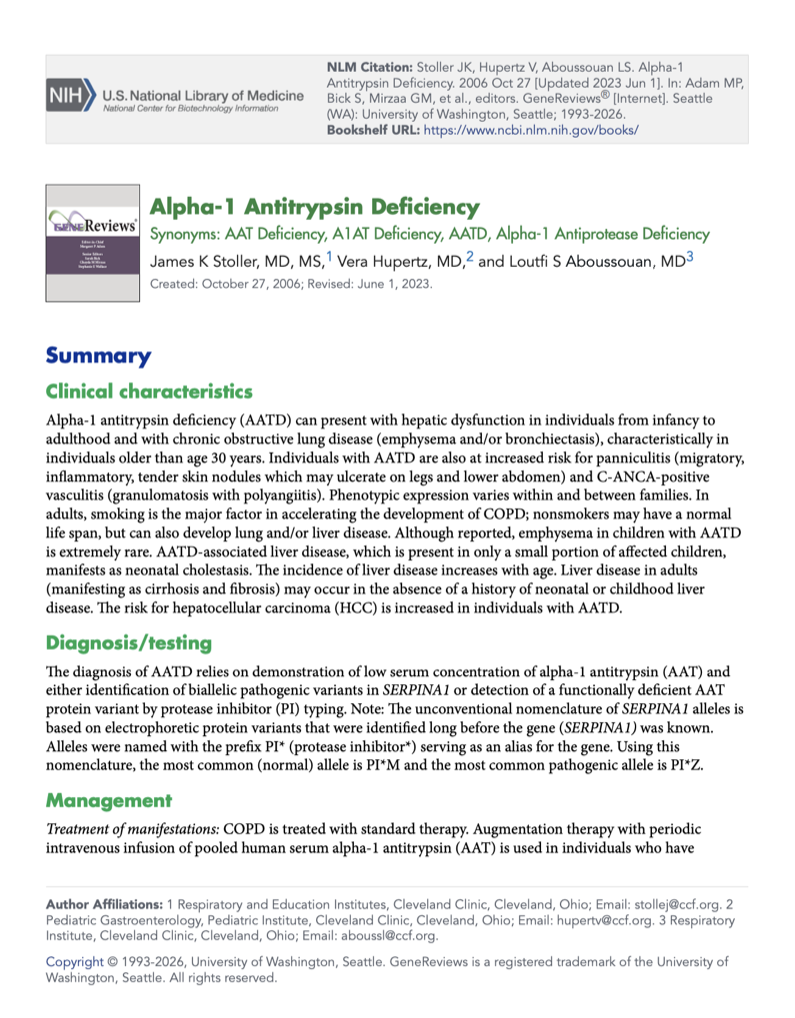
Alpha‑1 Antitrypsin Deficiency
24 pages
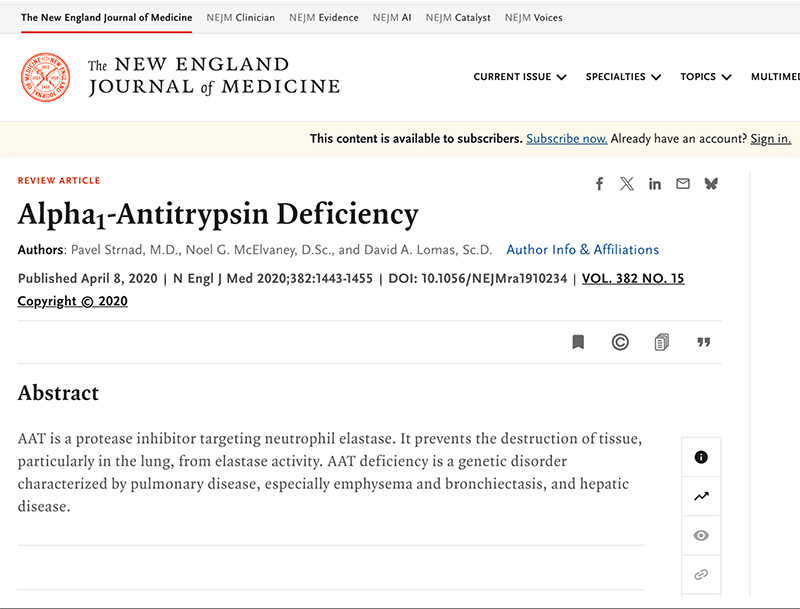
Alpha1-Antitrypsin Deficiency
13 pages
(Access to this article may require a subscription or purchase.)
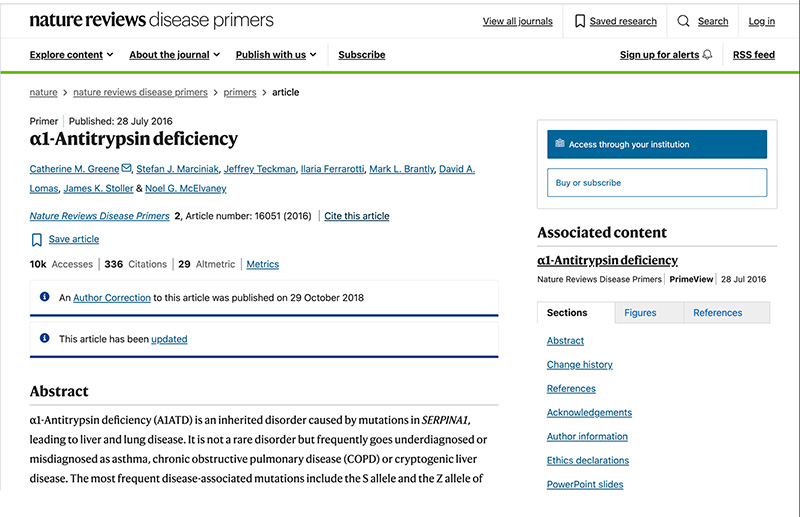
α1-Antitrypsin Deficiency
17 pages
(Access to this article may require a subscription or purchase.)
Detection
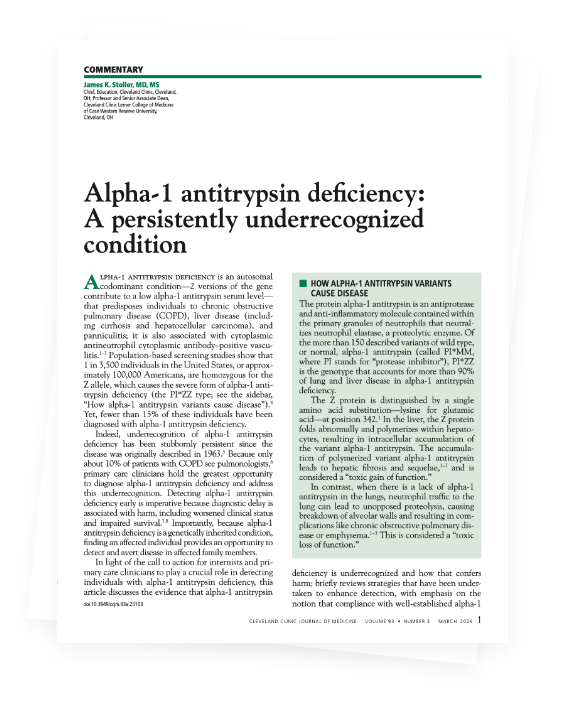
Alpha‑1 Antitrypsin Deficiency: A Persistently Underrecognized Condition
5 pages
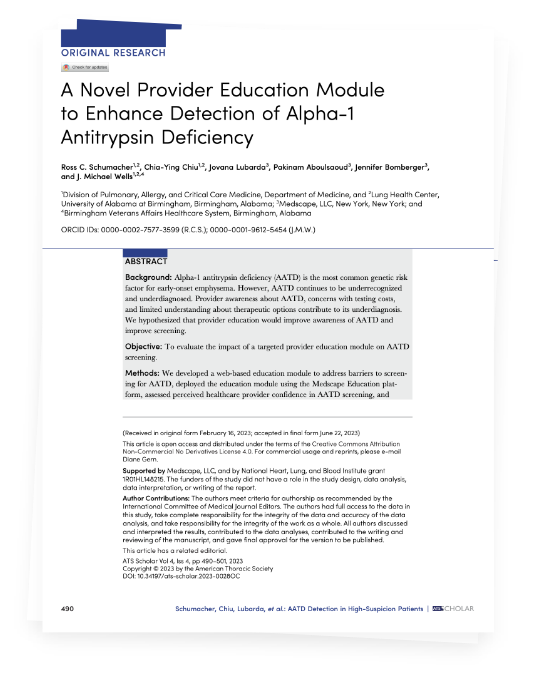
A Novel Provider Education Module to Enhance Detection of Alpha‑1 Antitrypsin Deficiency
12 pages
Detecting Alpha‑1 Antitrypsin Deficiency: Current State, Impediments, Opportunities, and Future Directions
9 pages
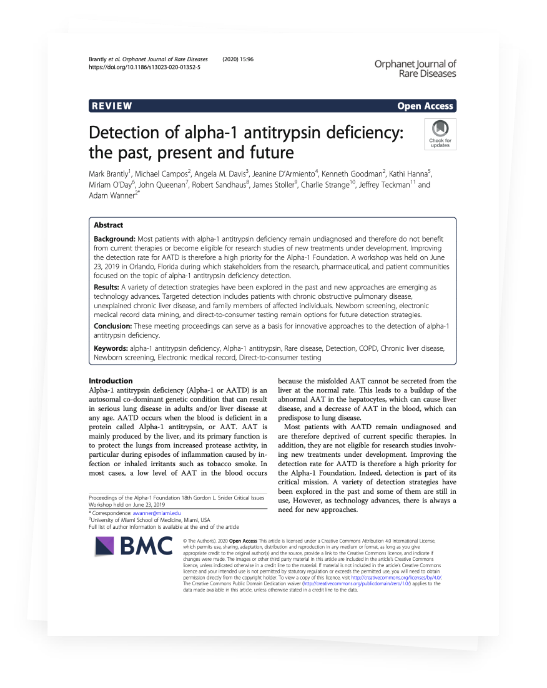
Detection of Alpha‑1 Antitrypsin Deficiency: The Past, Present, and Future
10 pages
Clinical practice guidelines, standards, and expert consensus statements
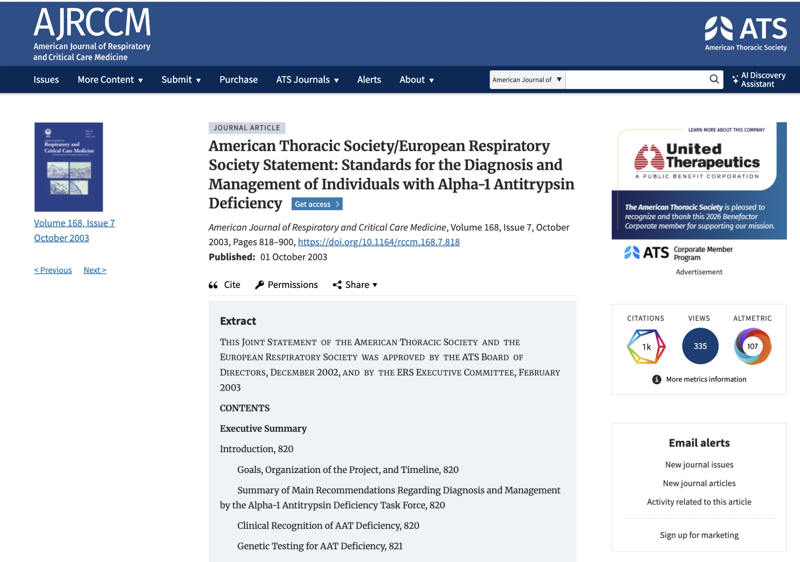
ATS/ERS: Clinical Standards Statement
American Thoracic Society/European Respiratory Society Statement: Standards for the Diagnosis and Management of Individuals with Alpha‑1 Antitrypsin Deficiency
80 pages
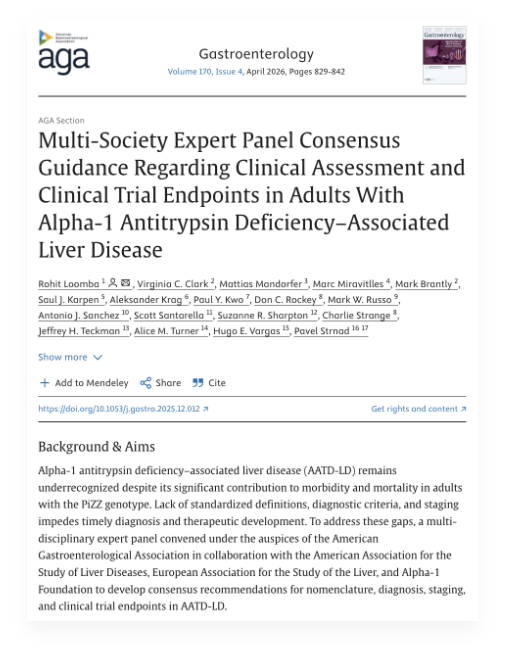
AGA: Multi-Society Consensus Guidance
Multi-Society Expert Panel Consensus Guidance Regarding Clinical Assessment and Clinical Trial Endpoints in Adults With Alpha‑1 Antitrypsin Deficiency–Associated Liver Disease
14 pages
(Access to this article may require a subscription or purchase.)
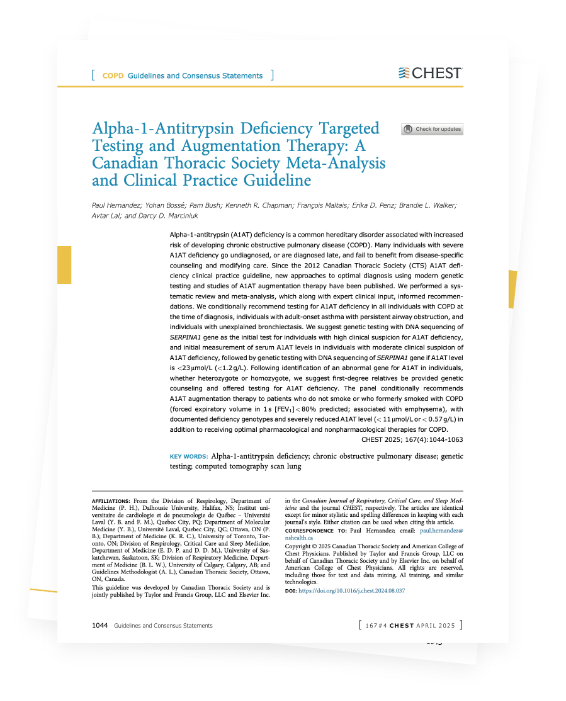
CHEST: Evidence-Based Clinical Practice Guideline
Alpha‑1-Antitrypsin Deficiency Targeted Testing and Augmentation Therapy: A Canadian Thoracic Society Meta-Analysis and Clinical Practice Guideline
20 pages
EASL: Clinical Practice Guideline
Multi-Society Expert Panel Consensus Guidance Regarding Clinical Assessment and Clinical Trial Endpoints in Adults With Alpha‑1 Antitrypsin Deficiency–Associated Liver Disease
14 pages
(Access to this article may require a subscription or purchase.)
GOLD: COPD Strategy Report
2026 REPORT: Global Strategy for the Diagnosis, Management, and Prevention of Chronic Obstructive Pulmonary Disease (2026 GOLD Report)
248 pages
Detection Playbook
AlphaDetect Flyer
XX pages
DOWNLOADThe Alpha‑1 Foundation (A1F) provides healthcare providers across lung and liver specialties with trusted information on AATD, diagnosis, research and care, as well as resources to support patients.
Healthcare providers can connect patients and families with free A1F resources, including the opportunity to speak with someone live for questions and guidance, educational resources and events, free genetic counseling, AATD experts and specialists, support groups, and opportunities to participate in research.
Contact the Alpha‑1 Foundation
(877) 228-7321
alpha1.org (opens in a new tab)
Healthcare Provider Resources
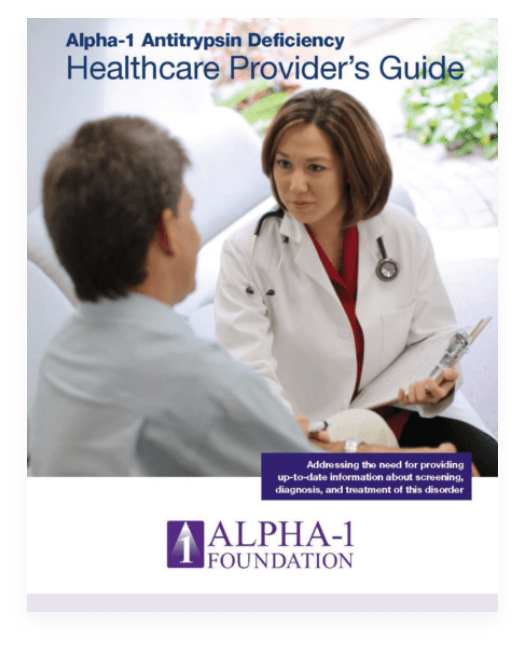
Alpha‑1 Antitrypsin Deficiency: Healthcare Provider’s Guide
20 pages
DOWNLOADPocket Guide
XX pages
DOWNLOAD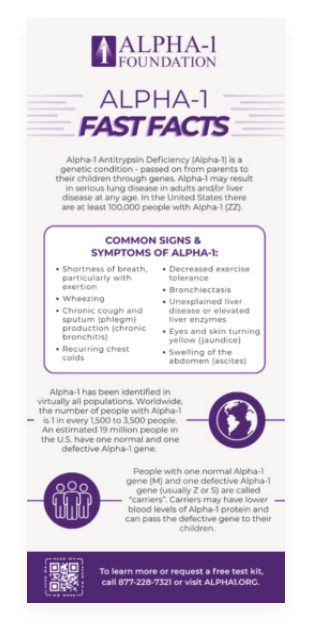
Alpha‑1 Fast Facts
2 pages
DOWNLOADPatient-facing Resources

What is Alpha‑1?
12 pages
DOWNLOAD
The Liver and Alpha‑1
10 pages
DOWNLOAD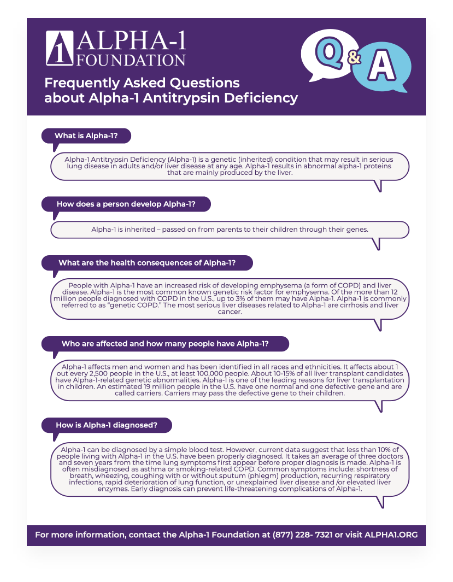
Frequently Asked Questions about Alpha‑1 Antitrypsin Deficiency
2 pages
DOWNLOAD