
Detection
Early detection gives patients options. Finding AATD sooner can help improve outcomes.
University of Michigan Health



Why earlier detection matters
Alpha‑1 Antitrypsin Deficiency (AATD or Alpha‑1) is also referred to as genetic COPD/emphysema and genetic cirrhosis and is a progressive, genetic condition that can silently and irreversibly damage the liver and lungs. In some cases, it can shorten life expectancy.
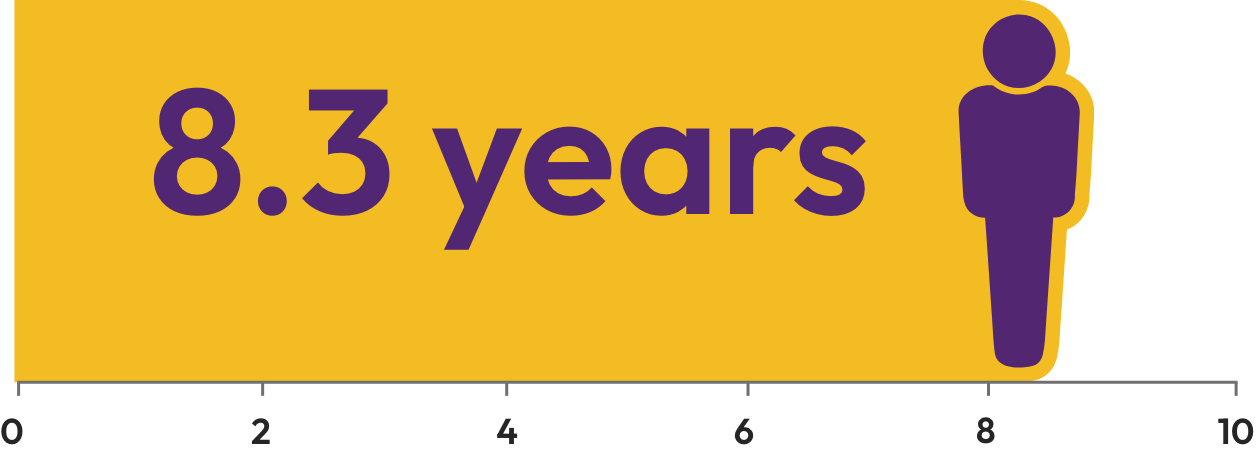
Because AATD symptoms often overlap with more common diseases, affected individuals may go undiagnosed for years. In fact, a retrospective study found that the average interval between the onset of symptoms and diagnosis was 8.3 years.1 This underscores the importance of accelerating detection to avoid real and irreversible consequences.
Detection provides timely answers for critical decision making.
Mean Time From First Symptoms to Diagnosis1
Who to test?
Many clinical practice guidelines, standards, and expert consensus statements recommend testing for AATD in patients with liver and/or lung disease2,3,4,5






To ensure that no affected individual goes undetected, test your patients with:
- COPD, regardless of age or ethnicity
- Emphysema
- Asthma, if there is persistent obstruction despite optimized treatment
- Bronchiectasis, if otherwise unexplained
- Liver disease
- Panniculitis and anti-proteinase-3
- Parents, siblings, and children of individuals identified with deficiency of alpha-1 antitrypsin should be tested
Early detection can help guide appropriate management and prevent irreversible damage due to progressive liver and/or lung disease.
Recommendations above are from the American Thoracic Society (ATS), European Respiratory Society (ERS), the American College of Chest Physicians (CHEST), Global Initiative for Chronic Obstructive Lung Disease (GOLD), the American Gastroenterological Association (AGA), the American Association for the Study of Liver Diseases (AASLD), and the European Association for the Study of the Liver (EASL). They are representative, but not fully inclusive of all reference sources.
More than 150 SERPINA1 variant alleles have been identified
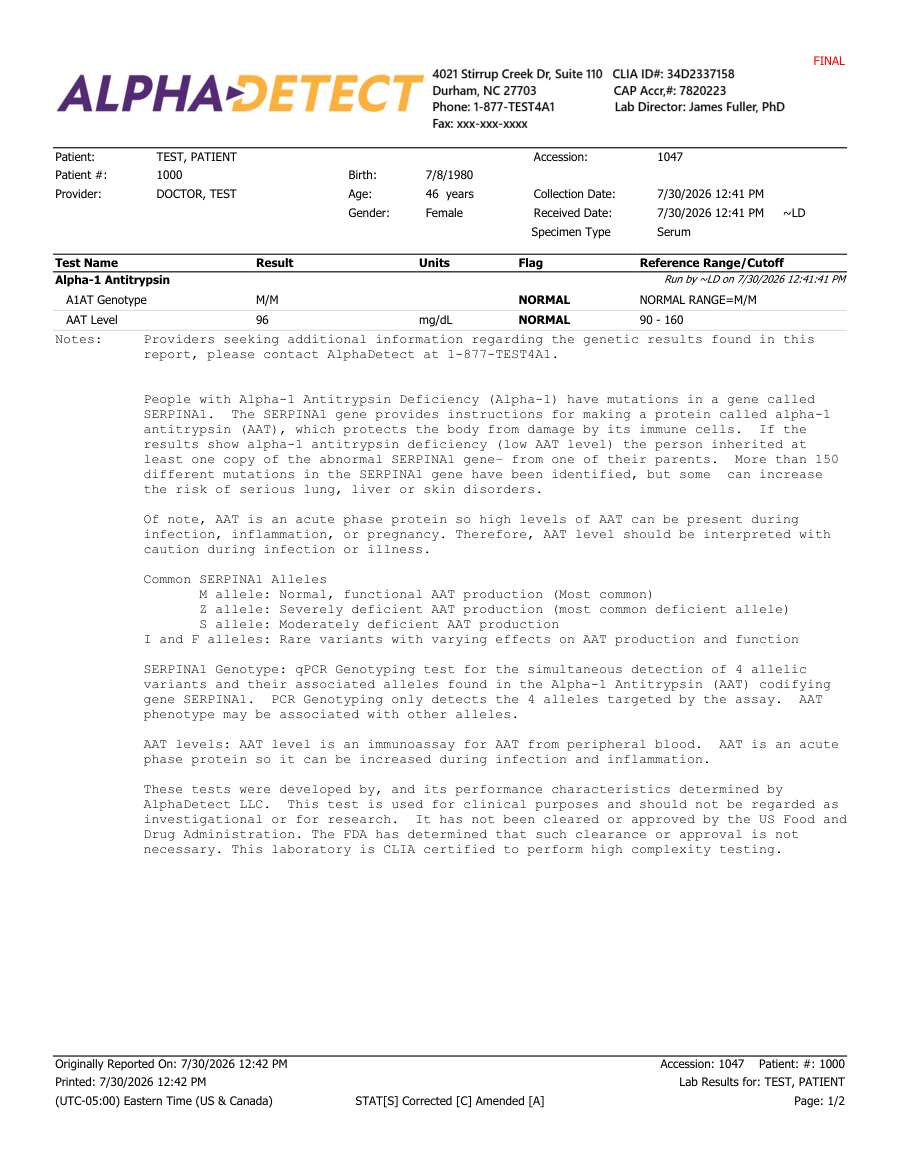
The condition is caused by deficient alleles. AlphaDetect tests for Z, S, I, and F because these four alleles account for ~96% of all deficient alleles, and reports on these four plus M, the normal allele.
Common Normal Allele
| M allele | Normal, functional AAT production |
Common Deficient Alleles
| Z allele | Severely reduced circulating AAT and intracellular accumulation in liver; associated with severe AATD |
| S allele | Moderately reduced circulating AAT |
| I allele | Rare allele associated with mild reduction in circulating AAT |
| F allele | Rare allele with normal AAT protein level, but impaired AAT function |
Let AlphaDetect support your detection efforts

The Provider Engagement Team
AlphaDetect’s Provider Engagement Team assists healthcare providers and organizations. Together, they build sustainable, guideline-aligned AATD detection programs and protocols. If you’re interested in implementing or expanding routine AATD testing within your practice or health system, we’d like to hear about your goals. .

Free Alpha‑1 Collection Kits, Testing, Reports, and Support
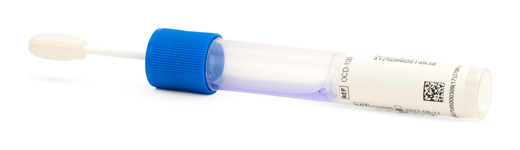
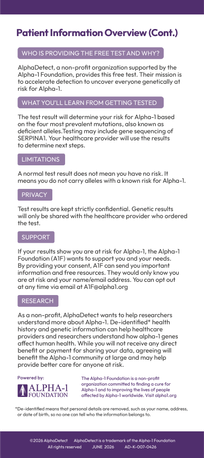
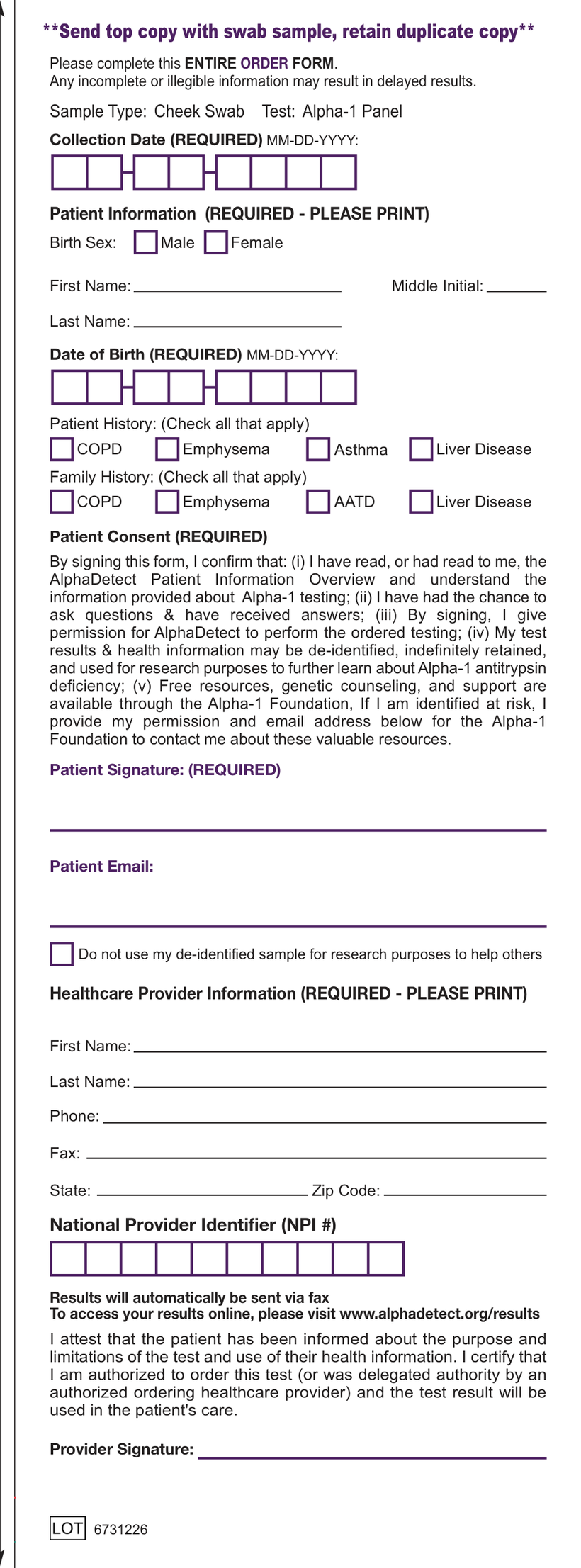
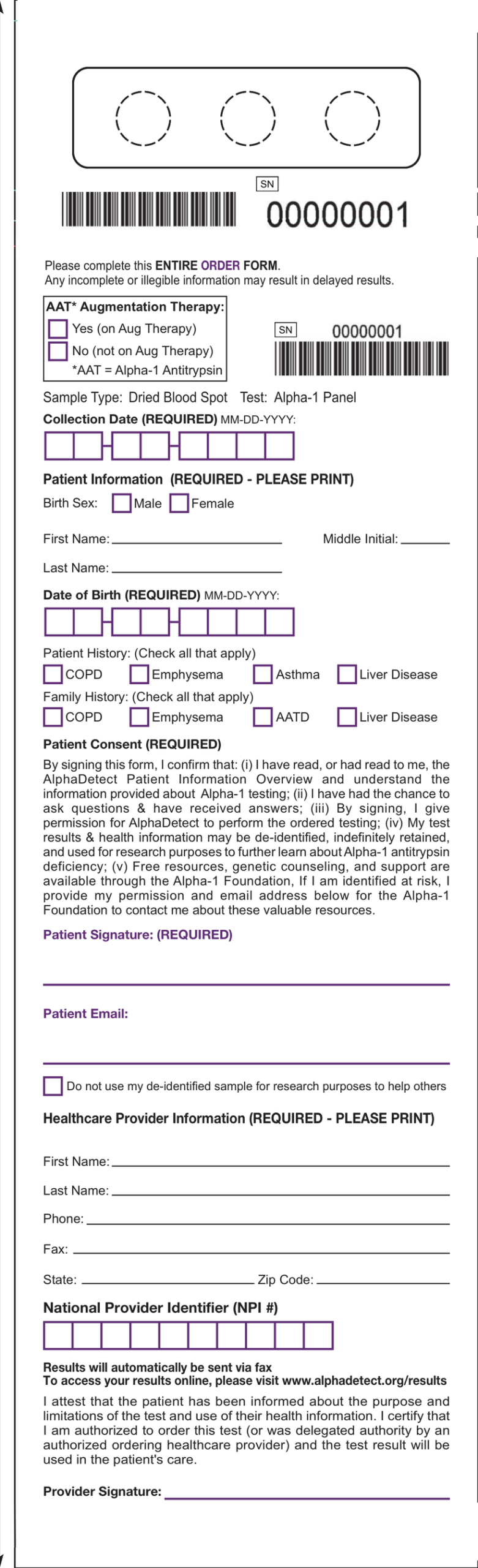
AlphaDetect provides free cheek swab and finger stick collection kits combined with AATD genetic testing reports and support. This makes it easy for you and your teams to test your patients with liver and/or lung disease as part of your standard of care.
Each kit provides the supplies needed, including a USPS postage-paid mailer. Additionally, you have the option to speak directly with the medical director of AlphaDetect for personalized support.
Importantly, both AlphaDetect kits test for the Z, S, I, and F alleles, because they account for ~96% of all deficient alleles, and report on these four plus M, the normal allele.
Reports are sent via eFax within 7-10 business days after the sample is received at our Durham, North Carolina lab and are also available through the AlphaDetect portal. Patient information is kept in the strictest confidence by our lab. Only the healthcare provider will have access to the report. The provider will share the results and their meaning with the patient. .
Alpha‑1 Cheek Swab Collection Kit and Test Report


Educational Resources
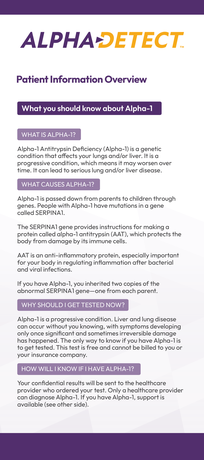
We offer educational resources to build on your detection efforts.
For patients who are detected, AlphaDetect serves as a seamless point of entry to the Alpha‑1 Foundation’s support and materials.
Access downloadable resources such as the Clinical Papers and Detection Resources for healthcare providers.
Make ruling out AATD an early and essential part of care for your patients with liver and/or lung disease, consistent with clinical practice guidelines/standards.
Approximately 20 million in the U.S. carry at least one deficient alpha‑1 antitrypsin allele associated with AATD. Finding them starts with testing.

The detection connector
AlphaDetect is unifying and activating the AATD community around its mission: accelerating detection to uncover everyone genetically at risk for AATD. We appreciate the support of our inaugural industry sponsors, which is enabling us to amplify our efforts.






References: 1. Campos MA, Wanner A, Zhang G, Sandhaus RA. Trends in the diagnosis of symptomatic patients with α1-antitrypsin deficiency between 1968 and 2003. CHEST. 2005;128(3):1179-1186.2. American Thoracic Society; European Respiratory Society. American Thoracic Society/European Respiratory Society statement: standards for the diagnosis and management of individuals with alpha-1 antitrypsin deficiency. Am J Respir Crit Care Med. 2003 Oct 1;168(7):818-900. doi:10.1164/rccm.168.7.818. PMID: 14522813.3. Sandhaus RA, Turino G, Brantly ML, et al. The Diagnosis and Management of Alpha-1 Antitrypsin Deficiency in the Adult. Chronic Obstr Pulm Dis. 2016 Jun 6;3(3):668-682. doi:10.15326/jcopdf.3.3.2015.0182.4. Global Initiative for Chronic Obstructive Lung Disease (GOLD). Global Strategy for Prevention, Diagnosis and Management of COPD: 2026 Report. Fontana, WI: Global Initiative for Chronic Obstructive Lung Disease; 2026. https://goldcopd.org/wp-content/uploads/2026/01/GOLD-REPORT-2026-v1.3-8Dec2025_WMV2.pdf Accessed September 4, 2026.5. Loomba R, Clark VC, Mandorfer M, Miravitlles M, Brantly M, Karpen SJ, Krag A, Kwo PY, Rockey DC, Russo MW, Sanchez AJ, Santarella S, Sharpton SR, Strange C, Teckman JH, Turner AM, Vargas HE, Strnad P. Multi-Society Expert Panel Consensus Guidance Regarding Clinical Assessment and Clinical Trial Endpoints in Adults With Alpha‑1 Antitrypsin Deficiency-Associated Liver Disease. Gastroenterology. 2026 Apr;170(4):829-842. doi:10.1053/j.gastro.2025.12.012. Epub 2025 Dec 11. PMID: 41390004.